
A humanitarian crisis of unprecedented scale has been unfolding in Sudan. Since April 2023, violent clashes between the Sudanese Armed Forces (SAF) and the paramilitary Rapid Support Forces (RSF) have displaced over 10.2 million people, exacerbating existing issues of conflict, disease outbreaks, economic instability and climate related natural disasters.
The numbers are staggering. Half of Sudan’s population, about 25 million people, urgently need humanitarian assistance and face acute food insecurity, with 8.5 million at emergency levels. The conflict has left nearly three-quarters of health facilities out of service, and a shocking 19 million children out of school.
Bakri Mahmoud, a Sudanese-born videographer and photographer now based in Melbourne, provides a stark perspective on the situation. “The situation in Sudan is horrific and beyond comprehension for most of us living in relative comfort here in the West,” he says. “It’s almost as if people assume that hunger and war is a normal state of affairs in Africa and this is just a product of how the world is. This is a huge misconception, in fact Sudan has never had anything on this world-ending scale happen before.”
Bakri raises what he believes is a fundamental issue in Western thinking: “Western altruism wants to see a better world but also wants to enjoy every single comfort it can afford, even if those comforts are built on the exploitation of the global south. The truth is, we perceive the plight of Sudanese civilians as separate from our privileges when in reality they sit on the same balance of power and dignity, one deemed to be more valuable than the other. People simply do not value Sudanese dignity enough to sacrifice even the mildest comforts because Western society tells us we should have it all.”
This crisis isn’t a distant problem. Victoria is home to a substantial Sudanese community. The 2021 Australian Census recorded 13,532 people of South Sudanese ancestry in Victoria, with 3,121 born in South Sudan. Many live in Melbourne’s south-western and north-western suburbs, forming vibrant communities that contribute to that state’s multicultural society.
The local Sudanese community is deeply affected by the ongoing crisis. Bakri explains, “For many of us, we know how real the human cost can be when military powers fight for control on the lands of civilians. We witnessed the collapse of Syrian cities and states like Libya almost fail. But we know we can and will collect ourselves again someday.”
However, Bakri expresses concern about the global response, “It’s a shame we don’t have much hope that anyone will actually ever inconvenience their Western comforts for our aid. And that’s not to do with how the world works, it’s to do with Western selfishness.”
Bakri elaborates, “In Sudan we believe, the more you have, the more you should give. In the West, we believe, I should have it all, then when I’m satisfied I’ll give back so people think I’m a good person. In the West we live for the rewards of today. In Sudan, we live to care and cherish the rewards of the afterlife so even the poorest share everything.”
As we become more aware of the situation in Sudan, it’s important to consider how Australians can contribute to raising awareness and supporting relief efforts. This can include:
1. Staying informed about the situation in Sudan through reliable news sources, like Dabanga.
2. Sharing accurate information about the crisis with your social networks.
3. Supporting reputable organisations working on the ground in Sudan, such as Khartoum Aid Kitchen and the Sudanese American Physicians Association.
4. Engaging with local Sudanese community organisations to learn about their initiatives and how to support them.
5. Challenging misconceptions about the crisis and promoting a more empathetic understanding of the situation.
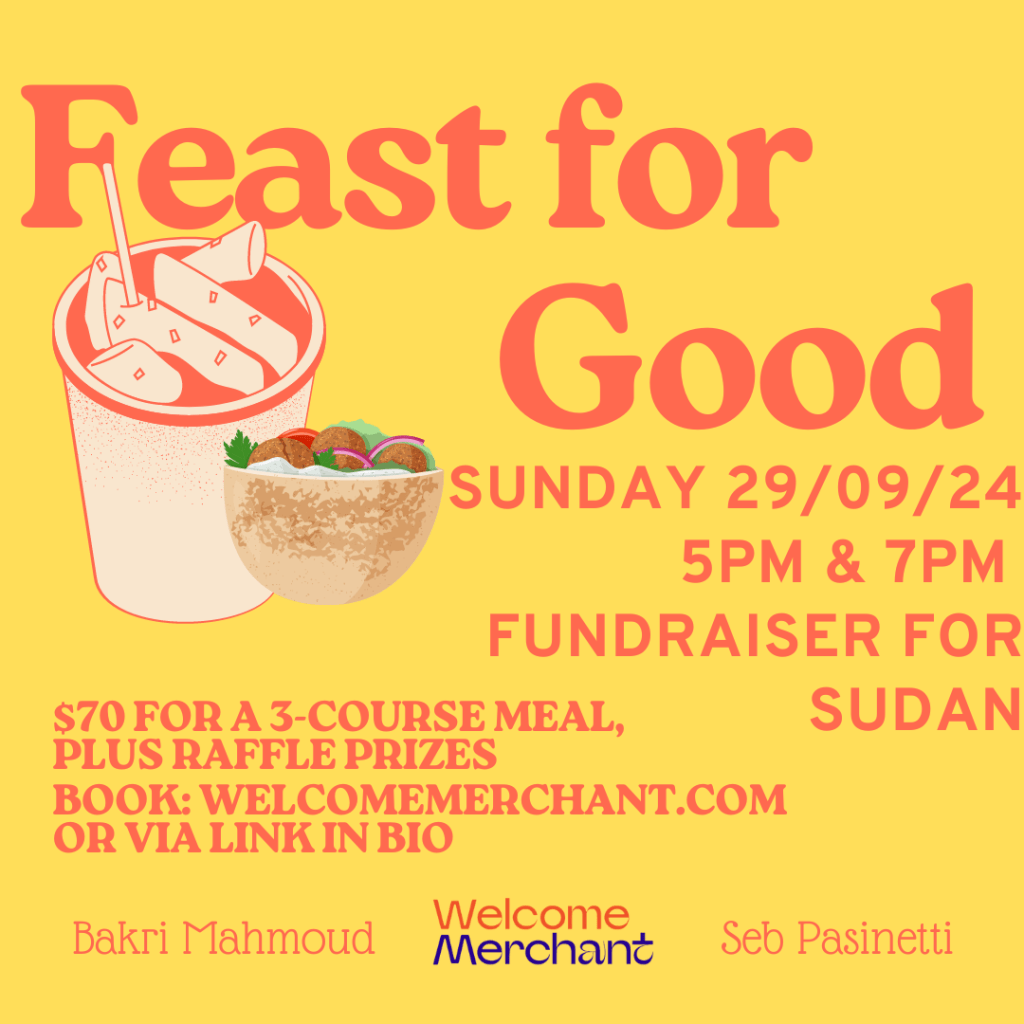
Here at Welcome Merchant we’re hosting a sold-out Sudanese fundraising dinner on Sunday 29 September in Melbourne, with a waitlist available for those interested.
The situation in Sudan remains dire, with millions of lives hanging in the balance. As the world grapples with how to respond to this crisis, Bakri offers a stark observation: “In Sudan, it will end up being the people who help themselves.”
For more information on the crisis in Sudan, you can follow Red Maat and Yassmin Abdel-Magied on Instagram.
Photo of soldiers sourced from Unsplash, taken by Daniel.