
This week, 4,400 athletes have arrived in Paris for the city’s inaugural Paralympic Games. Competing across 22 sports, these Paralympians will push the boundaries of athleticism, with resilience being a prerequisite of their inspiring feats. Among them, a group that has overcome not only physical disabilities but also the immense challenge of displacement: the 2024 Paralympic Refugee Team.
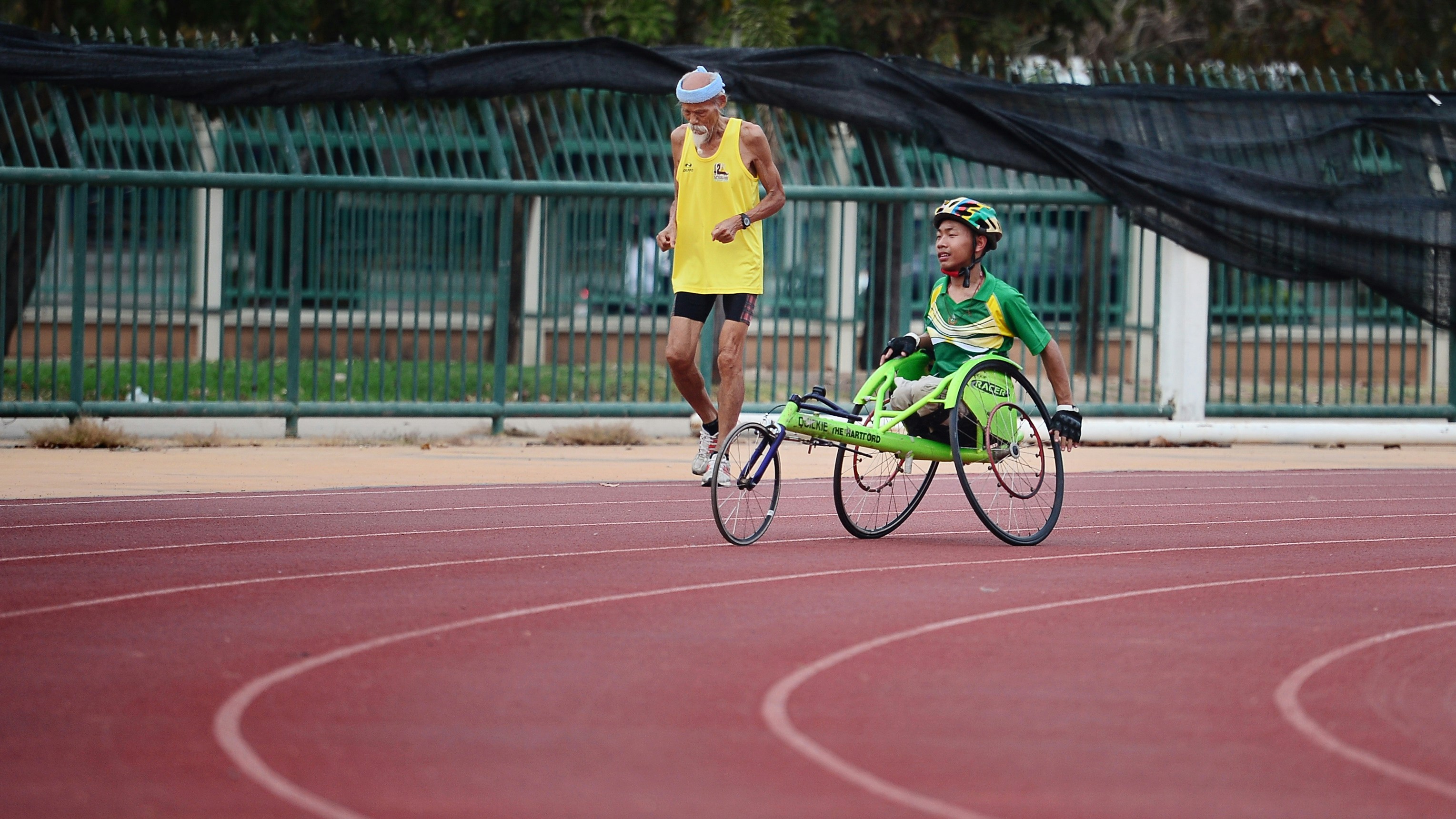
The Paralympic Games, a global sporting event showcasing athletes with disabilities, occurs in conjunction with the Olympic Games every four years. The Games originated in 1948 when Dr. Ludwig Guttmann created the Stoke Mandeville Games for World War II veterans with spinal injuries. These games eventually evolved into the Paralympics as we know it today by Rome 1960.
Paris 2024 will feature the largest Refugee Paralympic Team to date, consisting of eight athletes. Competing under the Paralympic flag, their participation highlights the plight of refugees whilst demonstrating that athletic excellence can thrive despite displacement. This marks the third appearance of a Refugee Paralympic Team, following the inclusion of two athletes in Rio 2016 and six in Tokyo 2020.
Whilst it’s clear the Paris 2024 Games have been marred by significant controversies, including issues of transphobia, racism, and political tensions, these challenges must not overshadow the incredible Refugee Paralympic Team athletes, each with a unique story of triumph against incredible odds.
Zakia Khudadadi: a Taekwondo athlete from Afghanistan, Khudadadi was evacuated just days before appearing in the 2020 Games due to the Taliban’s takeover. She was the second woman ever to represent Afghanistan at the Olympics. As the 2023 Para Taekwondo champion, she’s definitely one to watch, and even more so as she will be the only female contestant representing the Refugee Paralympic Team.
Guillaume Junior Atangana: a 400m athlete from Cameroon, Atangana is blind, and guided by fellow refugee Donard Ndim Nyamjua. A two-time gold medalist at the 2017 World Para Athletics Grand Prix, he narrowly missed a medal in Tokyo 2020 while competing for Cameroon. He will represent the Refugee Paralympic Team for the first time at Paris 2024.
Ibrahim Al Hussein: a swimmer, who became disabled during the Syrian Civil War. Sport has become Al Hussein’s lifeline, aiding his integration into Greek society. After fleeing to Greece via Turkey, he represents the Refugee Paralympic Team, having also competed in Tokyo and Rio. He describes the day his dinghy arrived on Samos island as “the day he was born.”
Salman Abbariki: a shot put athlete from Iran, Abbariki competed for his home country in London 2012. Paris 2024 will be his second Paralympic Games and his first representing the Refugee Paralympic Team. In the 2010 Asian Para Games, he set a record in shot put and won gold.
Hadi Darvish: a powerlifter from Iran, Darvish spent two years in a refugee camp in Germany, initially struggling to find a sports club due to lacking a permanent address. His persistence has paid off, and he will represent the Refugee Paralympic Team at Paris 2024, although he admits it’s challenging not to represent his native Iran.
Sayed Amir Hossein Hosseini Pour: a table tennis player from Iran, Hosseini Pour won two gold medals at the 2021 Asian Youth Para Games, making him Iran’s sole table tennis record holder. His goal is to secure a Paralympic medal in Paris. As he puts it, “Athletes with disabilities face two opponents: the competitor and the disability we live with every day.”
Amelio Castro Grueso: a wheelchair fencer from Colombia now residing in Italy, Castro Grueso is the 2024 Italian National Champion and a bronze medallist from the 2024 Wheelchair Fencing America’s Championship in Brazil. With these recent successes, he is a strong competitor for Paris 2024.
Hadi Hassanzada: a Taekwondo athlete born in Afghanistan and raised in Iran, Hassanzada has faced multiple displacements while seeking a safe country, eventually finding refuge in Austria. Despite losing his right hand and struggling with asylum, he views sport as a way to transform setbacks into opportunities, as evidenced by his participation in this year’s team.
The 2024 Paralympic Refugee Team defines perseverance, reconceptualising their struggles into a source of global inspiration. As they compete, their athleticism is sure to captivate the world. But so too are their stories.