
It is always a pleasure to learn about different traditional festivals celebrated by diverse communities. Welcome Merchant strives to be inclusive and highlight diverse cultures and their unique festivities. This year Lunar New Year falls on the 10th of February making it the year of the dragon according to the Chinese zodiac. The Year of the Dragon brings good luck, strength, and power and is also said to control the weather and water.
What is Lunar New Year?
Lunar New Year is the beginning of the new year which is based on the lunar or lunisolar calendar. It is celebrated due to the arrival of spring. It is an important event celebrated in China as well as South Korea, Vietnam, and countries with a high East Asian population. The exact date of the event differs among cultures but the reason to reunite with immediate and extended families remains the same. It is important to remember there are differences when celebrating Lunar New Year amongst asian communities. Lunar New Year is celebrated differently depending on the region and country.

How is it celebrated?
In China, it is known as the spring festival which is celebrated for fifteen days with various traditions. At home, it is common for families to decorate their windows with red paper and symbols associated with the festival to bring in an auspicious new year. Red lanterns displayed inside and outside houses, couplets on doors and a big Chinese character stating luck at the front entrance. This all done to welcome the gods of wealth being the God of Civil and the God of Military. It is also important for the home to be cleaned and shopping done from local street markets.
It is a site to see the streets all dressed up to celebrate the New Year with banners, flags, and flowers to commemorate the beginning of a festive atmosphere. The sight of peaches, plums, and daffodils is mostly present to bring in good luck.
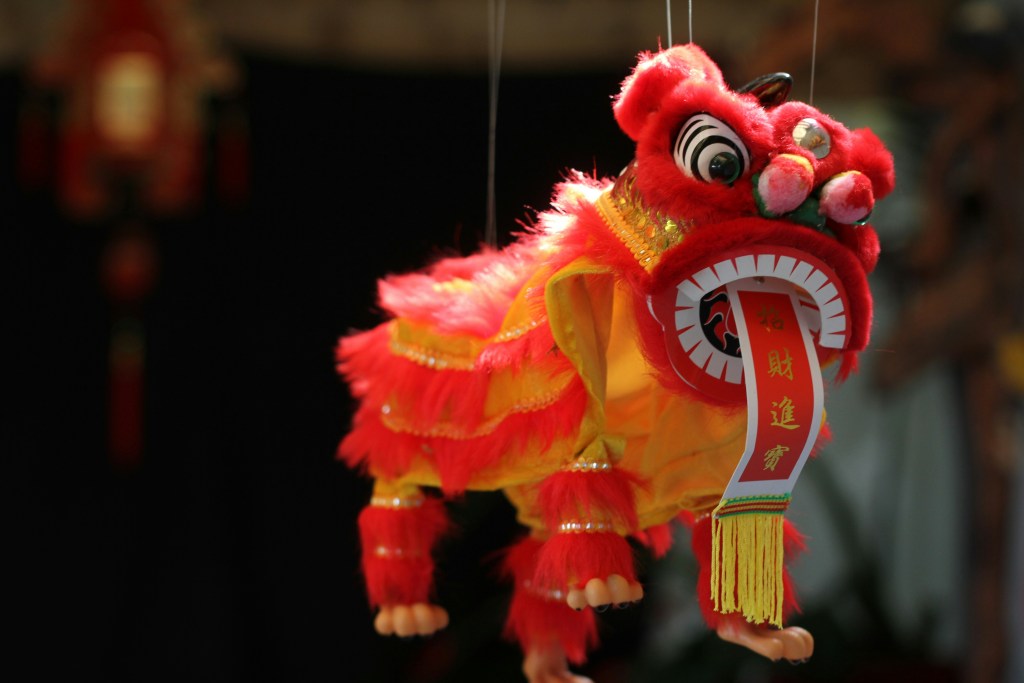
There is the famous dance by the Lucky Mascots and when witnessed by onlookers’ is a sign of a lucky year ahead. The mascots include dragons, phoenixes, unicorns, and dragon turtles. These are fictional animals either living in the sea or flying in the sky and are seen performing the Lion and Dragon dance to celebrate the new year.
The Lunar New Year’s Eve reunion dinner is important as it signifies the start of the festival with a large feast to be shared by loved ones. The abundance of food with symbolic meaning encapsulates what the festival is all about, to bring good luck, fortune, and prosperity for the year ahead.
It is also common for families to burn incense to worship their ancestors while older members of the family give the younger ones pocket money in red envelopes for good luck.
On the fifteenth day, there is a Lantern Festival where children go out at night and carry paper lanterns while solving riddles displayed on the lanterns. The brightest lantern brings good fortune and hope with bad luck being chased away. In older times young people went out hoping to find love which the matchmakers were sure to help. They would attempt to pair couples but in modern times this festival no longer follows this tradition. However, lanterns are still hung up despite the changes.
What traditional meals are eaten?
A big feast is served up to start the new year traditions with friends and family. It is common for people to travel back home to celebrate this occasion and eat to their heart’s desire. Some of the dishes include:
1) Whole Steamed fish
This dish is served as a symbol of prosperity and must be served with its head and tail intact to represent both a positive beginning and ending to the year. It is common to have steaming snapper or bream in a bamboo steamer. The addition of Chinese mud carp, crucian carp and catfish are some more options. In some instances, half of the fish is saved for the following day to signal long-lasting future prosperity. A part of the tradition is to serve the fish with the head facing elderly or distinguished guests who must eat the fish first. It is also considered lucky for the people facing the head and tail to drink together during the meal.
2) Chinese Dumplings
There is a Chinese word for this dish meaning the exchange between the old and new year. It is said the more of these you eat during the festival the more money you can make in the new year. The dumplings’ shape resembles a Chinese silver ingot, a currency once used in Imperial China. Their symbolism of wealth is determined by the number of pleats present as the opposite were to happen without them. It is also important to serve them in a line rather than a circle to represent the forward movement.
3) Tāngyuán (Sweet Rice Balls)
This dish may be popular during China’s Lantern Festival at the end of Lunar New Year, they’re also commonly enjoyed during the Spring Festival in South China. Chewy balls made from water and glutinous rice flour served either deep-fried or in a hot broth or syrup. It can be stuffed with sweet or savoury fillings consisting of sesame paste, red bean pastes or chopped peanuts. The round appearance and them mostly being served in family gatherings, these rice balls have come to symbolise unity and family togetherness.
4) Cháng shòu miàn (Longevity Noodles)
Longevity Noodles are seen as good luck and provide a long life when eaten. In Northern China, these noodles can be up to two feet long. It is said that the longer your noodles, the longer your life. Make sure not to bite while eating and break it while cooking since that signifies a life cut short. They can be served up either fried or boiled in broth, along with various meats and add-ins.
What traditional clothes are worn?
It is expected that friends and family all spoil themselves with new sets of clothes to bring in the Lunar New Year symbolising a fresh start. It is important to wear something red while celebrating the new year as it represents strength and prosperity. The women usually wear Cheongsam sometimes referred to as a mandarin gown taking inspiration from qizhuang, the ethnic clothing of the Manchu people. The men often wear Changshan which is a Chinese robe derived from the Qing dynasty.
Why not attend any local Lunar New Year celebrations in your area?
Visit one of our merchants Zen Tea Lounge who support women and provide a safe space to rebuild their lives.
Welcome Merchant wishes those who celebrate a wonderful Lunar New Year with friends and family.
Feature photo by bady abbas on Unsplash